

Start with a quick self-check and clear goals
Before opening any support tool, take two minutes to name what you’re feeling. Use simple language like “tight chest,” “racing thoughts,” or “worry about work,” because precise wording helps you choose the right exercise. Then decide what anxiety relief app “help” means for this moment, such as calming your body, reducing rumination, or improving sleep readiness. Writing a one-sentence goal makes the practice feel more concrete and easier to stick with.
Next, set boundaries for how you’ll use the app. For example, you can schedule short sessions after stressful triggers, like before replying to emails or after commuting. If your anxiety spikes unexpectedly, use a brief “reset” routine rather than trying to solve everything at once. A practical rule is to begin with 5–10 minutes and only extend if you notice calmer breathing and less mental clutter.
Use guided exercises that match your anxiety pattern
Look for features that help you regulate both body sensations and thought patterns. Breathing prompts, grounding activities, and progressive muscle relaxation can help when anxiety feels physical. If your mind won’t stop replaying scenarios, ai therapy app choose exercises that challenge unhelpful thoughts and redirect attention. Pairing the correct technique to the source of discomfort is often what turns an app into a daily coping partner.
Many people benefit from “micro-practices” they can do in real life, not only in a quiet room. For instance, try a quick 60-second sensory scan: notice five things you can see, four you can touch, three you can hear, two you can smell, and one you can taste. If you feel stuck in worry loops, use a journaling prompt to separate facts from predictions, then write one realistic next step. Consistency matters more than intensity, so choose the exercise you can repeat even on busy days.
Try AI-guided support and track what works for you
Ask it to help you identify triggers, summarize your feelings, and suggest coping steps you can test immediately. For example, you can describe a situation—like anxiety before meetings—and request a plan that includes a grounding method, a thought reframing prompt, and a short self-talk script. The best outputs are specific and actionable, so keep refining your request until the suggestions feel usable.
Tracking turns “I think it helped” into clear evidence. Record what exercise you tried, how intense your anxiety felt before and after, and whether the result lasted. Over time, you’ll notice patterns such as breathing exercises working best for physical tension or cognitive prompts helping with repetitive worry. This data also helps you adjust your routine, because you can spend less time on tools that don’t fit your needs and more time on what reliably supports you.
Conclusion
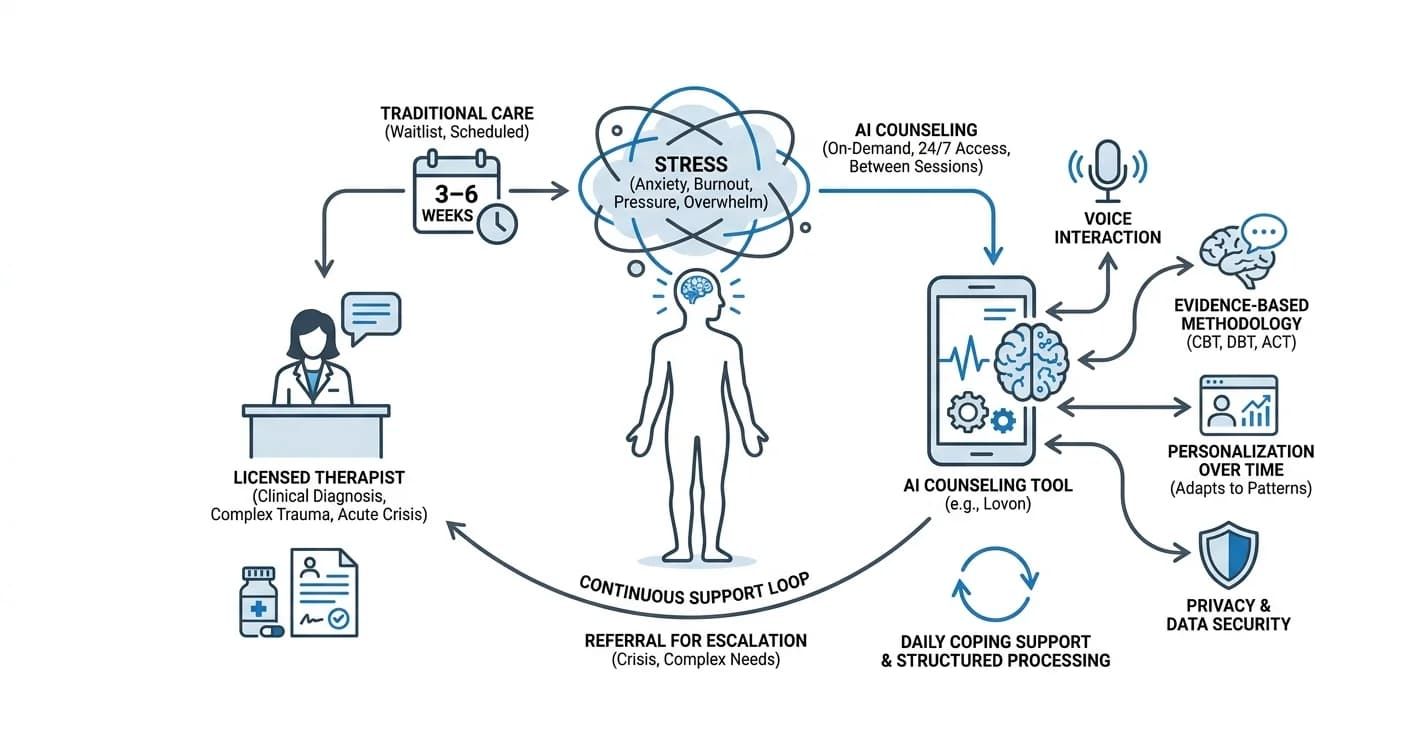
A practical anxiety relief routine works when you combine self-checking, the right type of exercise, and reflection on outcomes. Start small, match techniques to what your anxiety is doing to your body or thoughts, and use guided support to reduce friction when you feel overwhelmed. If you want an accessible approach to emotional support, Lovon Inc offers tools that help you explore coping strategies, reflect on feelings, and build healthier habits through convenient online mental wellness support. Using lovon.app as a companion can make it easier to stay consistent and learn what helps you return to balance. Remember that apps are best used as part of a broader care plan, especially when anxiety becomes persistent or severe. If symptoms worsen or you feel unsafe, seek support from a qualified mental health professional and use the app alongside that guidance. Lovon Inc is built to support that journey with approachable guidance and practical tools.