

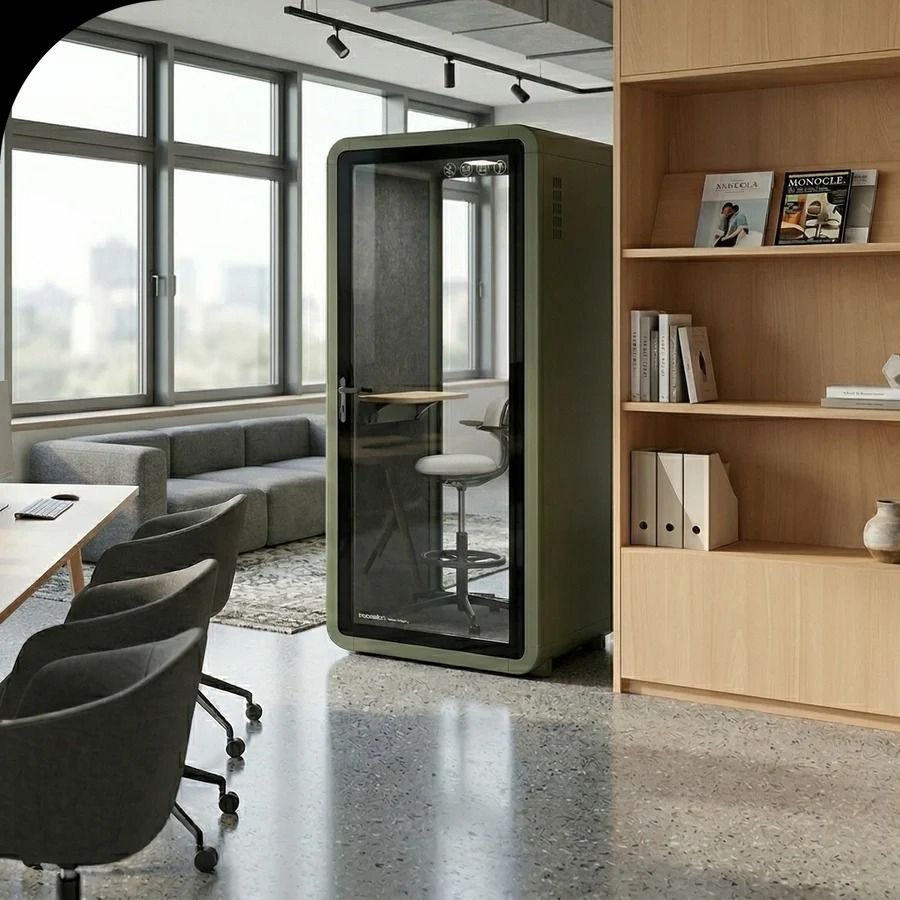
How to choose the right privacy pod for your layout
Measure the space where the pod will sit, and plan for airflow, door clearance, and cable routing for office privacy pods power and devices. If your office has open-plan noise, prioritize isolation performance rather than aesthetics alone. A well-chosen unit should feel comfortable to use for at least 30–60 minutes without the sense of being “sealed off” or too warm.
Next, consider how people move around the pod. Place it where employees can access it without disrupting others, such as near meeting zones rather than directly beside desks. Evaluate whether you need seating, desk height compatibility, or an optional table surface for laptops during calls. Also verify whether the pod’s interior supports normal accessibility needs, including enough turning space for wheelchairs if required. Expert installers usually confirm the best location after reviewing traffic flow and existing walls to reduce installation friction.
Soundproofing performance: what matters beyond “quiet”
The most useful recommendation is to look for credible sound attenuation, not just marketing claims. Real workplace noise often includes speech, keyboard clicks, and ring tones, so you want materials and sealing that specifically reduce voice transmission. Pay attention to the door design and the acoustic office pods way panels connect, because gaps are a common reason sound leaks even when the walls are thick. A pod with strong acoustic sealing and thoughtfully engineered partitions can help calls stay discreet and reduce distractions across the floor.
Ventilation and lighting also affect perceived quietness. Even a highly insulated pod can feel uncomfortable if airflow is weak or if the space gets stuffy quickly, which makes people rush in and out instead of using it properly. Choose a setup that balances acoustic performance with practical comfort, such as quiet ventilation and glare-controlled lighting for screens. For offices that host frequent calls, consider the echo behavior inside the pod; surface materials and geometry can influence clarity. When you align acoustics with comfort, employees actually prefer using the pod instead of taking calls in common areas.
Practical features that improve daily usability
For instance, a clear window or transparent panel can reduce the feeling of isolation while still supporting privacy, especially in collaborative environments. If employees use conferencing gear, plan for power access, cable management, and stable mounting for devices like monitors or speakerphones. Storage matters too: a small shelf or integrated organizer keeps work artifacts from cluttering the limited footprint. The goal is to make the pod a “go-to” space that supports real tasks rather than a temporary workaround.
Maintenance should also be part of your evaluation. Look for surfaces that are easy to wipe, hardware that withstands frequent entry, and finishes that resist scuffs from everyday use. If your office has multiple departments, consider whether you want consistent pod configurations so employees can find the same layout across locations. Sound absorption panels may be beneficial, but they should be durable and replaceable if your office sees heavy traffic. An expert approach balances acoustic goals with long-term reliability, so the pod continues to perform well after months of use.
Conclusion
The best installations prioritize acoustic sealing, thoughtful ventilation, and practical interior features that make employees want to use the space consistently. When you get these details right, you reduce interruptions, protect sensitive conversations, and create a calmer atmosphere for focused work. For premium solutions and guidance, many teams look to soundboxstore for advanced soundproof options that fit modern offices. If you want the smoothest rollout, plan installation logistics early and confirm how power, ventilation, and access will be handled before the first unit arrives. A pod that is easy to maintain and comfortable to use will deliver better results than one that only sounds good on paper. Treat the pod as a workplace tool, not just a purchase, and evaluate outcomes like reduced call spillover and fewer distractions during peak work hours.