

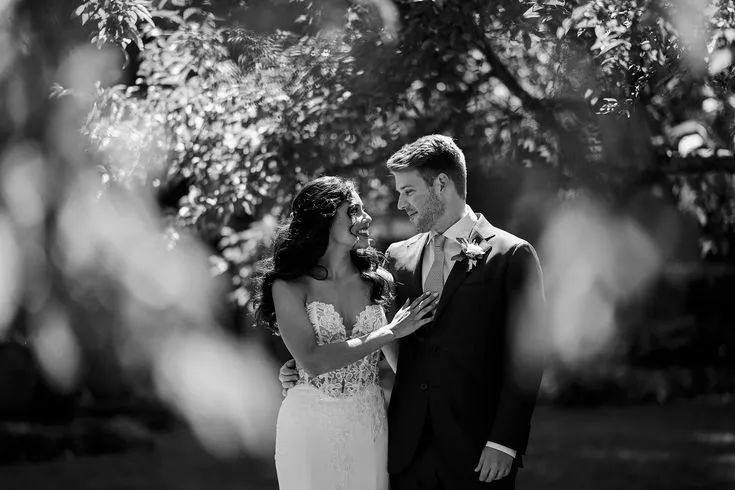
Modern wedding galleries are usually filled with rich color: mountain greenery, autumn leaves, florals, clothing, candlelight, and décor. Yet black-and-white photographs continue to hold a distinctive place in wedding storytelling. Removing color changes the way an image is read. Expressions, gestures, contrast, texture, and movement become more prominent, which can give certain moments a quieter or more emotional quality. Strong galleries do not use monochrome simply for nostalgia; they use it when black and white helps the photograph communicate more clearly.
Color Is Not Always the Main Story
Color can add important information to a photograph, but it can also compete for attention. A bright background, mixed reception lighting, or several bold outfits may pull the eye away from the people at the center of the frame.
A Burnsville Nc Wedding Photographer working in mountain settings may encounter everything from vivid summer landscapes to dark wooden interiors. In some frames, those colors strengthen the atmosphere. In others, removing them can shift attention toward a parent’s expression, a couple’s hands during the ceremony, or movement on the dance floor.
The decision works best when it serves the image rather than following a fixed percentage of black-and-white edits.
Emotion Can Become More Immediate
Some wedding moments contain little visual complexity but a great deal of feeling. A tear during a toast, a nervous breath before walking down the aisle, or a hug after the ceremony may not depend on the color of the room.
Black and white can simplify these scenes. Without strong color cues, viewers often notice faces, body language, and light first. That does not automatically make an image more emotional, but it can remove distractions from an already meaningful moment.
Texture Gains More Importance
Mountain weddings often include natural textures such as wood, stone, fabric, mist, foliage, and weathered architecture. Monochrome photography can emphasize the contrast between these surfaces differently from color.
The same applies to clothing and small details. Lace, suit fabric, wrinkles in a handwritten letter, or rain on a window can become visually stronger when shape and tone take priority.
This makes black-and-white images useful not only for portraits but also for atmospheric photographs that connect parts of a wedding story.
Reception Photos Can Benefit From Monochrome
Reception lighting is rarely consistent. DJs, decorative uplighting, candles, phone screens, and venue fixtures may create different color temperatures at once.
A skilled Destination Wedding Photographer Asheville may use that mixed lighting creatively in color photographs, but some energetic reception frames can become cleaner in black and white. Motion, laughter, silhouettes, and expressive faces often remain compelling even when the original color is removed.
Monochrome can also give high-energy dance-floor photographs a cohesive visual rhythm without making every frame look identical.
Not Every Photograph Needs a Second Version
Couples sometimes assume that every important color photograph should also be delivered in black and white. That approach can create unnecessary duplication.
A stronger gallery usually contains monochrome images because the treatment adds something specific. Perhaps the light is dramatic, the expression is especially strong, or the scene becomes clearer without competing colors.
When both versions communicate the same thing equally well, including both may add quantity without adding meaning.
Black and White Should Still Feel Modern
Monochrome wedding photography does not have to imitate old film. Contemporary black-and-white editing can be clean, soft, high-contrast, or restrained depending on the scene and the photographer’s style.
Couples reviewing portfolios should look at how monochrome photographs fit beside the color work. The transition should feel intentional rather than random. Highlights need detail, while shadows should support the mood without hiding important information.
Think About the Gallery as a Whole
A wedding gallery is stronger when its images work together. Color can establish season, décor, flowers, and landscape, while black and white can create pauses that emphasize emotion or form.
Using both gives photographers another storytelling tool. The objective is not to decide which format is superior, but to recognize that different moments may benefit from different visual treatments.
Conclusion
Black-and-white wedding photography remains valuable because it changes what viewers notice. By reducing color, an image can place greater emphasis on expressions, movement, texture, light, and relationships. It can simplify complicated reception scenes, strengthen quiet emotional moments, and add visual variety to a larger gallery. At the same time, monochrome is most effective when used selectively rather than automatically. A thoughtful wedding collection allows color to preserve the character of the setting while using black and white where simplicity gives a moment greater clarity and lasting impact.