

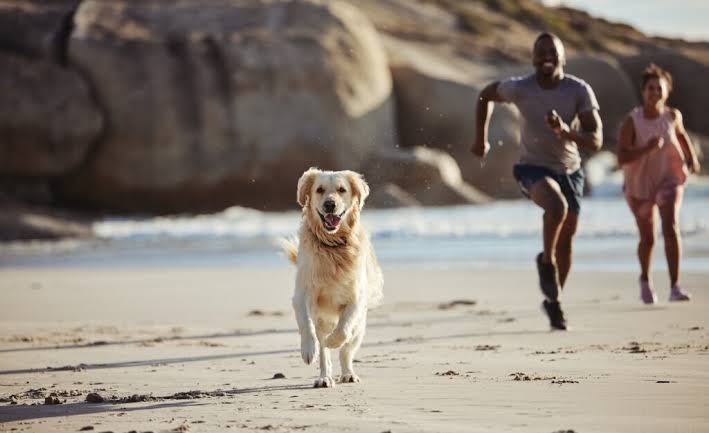
When a dog is restless, the usual advice is simple: tire it out.
So the walk becomes longer. Another ball gets thrown across the yard. An extra trip to the park is added before dinner. Sometimes that works beautifully. The dog comes home, finds a comfortable spot, and sleeps.
Other times, an hour later, it is racing through the house again.
Physical exercise matters, but activity is only one part of the picture. Dogs also use their brains, respond to what is happening around them, and develop habits based on repeated experiences. A busy dog may need movement, but it may also need clearer communication and something useful to think about.
Give the Brain Something to Do
A walk can be more than covering a certain number of miles.
Let the dog stop and investigate a smell. Change direction unexpectedly and see whether it notices. Pause somewhere quiet and practice a familiar cue before continuing.
None of this looks particularly impressive, yet the dog is making decisions throughout the process.
Simple activities at home can work too. Hide a favorite toy somewhere easy and let the dog search for it. Scatter a few pieces of food safely around a room. Practice two or three known behaviors in a different order.
Thinking can be tiring in its own way.
Movement Can Require Concentration
Running freely and moving through a structured activity are not quite the same experience.
When a dog has to follow direction, navigate around something, or change pace in response to its handler, movement starts requiring attention as well.
That is one reason owners may become interested in dog agility training austin. Activities that combine movement with communication can give energetic dogs something more purposeful to do than simply running until they are tired.
There is no reason to rush, though.
A dog’s age, confidence, experience, and physical ability should all be considered before introducing more demanding activities. Starting with easy challenges gives both dog and owner time to understand what they are doing.
Excitement and Aggression Are Not the Same Thing
A dog barking and pulling at the end of a leash can look alarming. But appearance alone does not explain what is happening.
Some dogs become highly excited around other animals. Others may be frightened, frustrated, uncomfortable with close approaches, or responding to something learned from earlier experiences.
This distinction is significant because the underlying cause of the reaction may impact the management of the reaction.
Owners dealing with concerning behavior may look into aggressive dog training austin for professional guidance rather than guessing why their dog is reacting.
Labeling every intense response as simple disobedience can miss useful information about the circumstances surrounding it.
Distance Can Be Useful
Imagine a dog that reacts whenever another dog comes within ten feet but can calmly notice one from across the street.
That extra distance is valuable.
It creates a situation where the dog may still be capable of paying attention to its owner. Training can begin there instead of waiting until the animals are so close that barking or lunging has already started.
Over time, the workable distance may change.
The important part is not forcing the dog into the hardest version of the situation on day one. Learning is difficult when excitement or discomfort has already taken over.
Calmness Deserves Practice Too
Owners of energetic dogs spend plenty of time encouraging movement. Fewer deliberately practice stopping.
Being able to settle is useful.
After a walk or game, allow time for the dog to transition into something quieter. A regular resting area can help create a difference between active time and downtime.
At first, a busy dog may not remain there very long. That is fine.
Calm behavior can be noticed and encouraged in the same way owners reward a good sit or a successful recall. Gradually, doing nothing becomes another familiar part of the day.
Watch the Dog in Front of You
Two dogs can react very differently to the same routine.
One may return from a busy outing relaxed. Another might come home even more stimulated. One loves working around distractions, while another needs additional space before it can concentrate.
There is no single activity schedule that suits every dog.
Owners can learn a lot by watching what happens after exercise and training, not just during it. Does the dog settle? Is it still restless? Did the activity seem enjoyable, or did the dog become increasingly overwhelmed?
Those observations help shape what to try next.
Conclusion
Keeping a dog physically active is important, but exercise alone does not answer every training or behavior question. Mental challenges, clear communication, manageable exposure to distractions and opportunities to settle can all contribute to a more balanced daily routine.
Owners who are unsure how to channel their dog’s energy or handle more difficult behavioral responses can visit caninemoxy.com to learn about its professional training services and owner education.