

Quick Facts to Verify Before You Buy
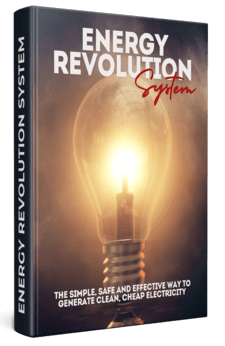
Start by treating any “free electricity” claim as a testable promise, not marketing hype. Next, look for what you receive in the box—such as diagrams, Energy Revolution System components list, or step-by-step assembly details—and compare that against the complexity of the technology being promised. If the guide is vague about hardware requirements, wiring specifics, or safety constraints, that vagueness is a red flag you should write down in your checklist.
Then verify the refund terms in writing from the payment platform, because “refund policy” details matter when a product doesn’t work as advertised. In this case, you should review the ClickBank refund window and make a clear plan to test the materials within that period. Create a simple checklist item: “I will confirm where to request a refund and what conditions apply.” Also note whether the product is a digital download with any limitations on returns, because policies can differ between physical goods and PDFs. Having this information ahead of time reduces stress if your results don’t match the sales claims.
Checklist for Testing the Claims Like a Physics Problem
Before building anything, convert the marketing language into plain technical questions. A checklist item should ask: “Where does the energy come from, and how is it measured?” In real electrical systems, energy conservation still applies, meaning you need an input source and a method to account for losses. If a claim implies you can extract usable electricity from nothing, you should expect it to conflict with basic physics unless the system is clearly powered by an external energy input. This is why claim-testing should focus on the energy budget, not just on photos or anecdotal results.
Next, check whether the guide explains measurement and instrumentation in a credible way. A quality approach should include instructions for verifying voltage, current, and power with proper meters, and it should discuss expected tolerances and error sources. Add this checklist line: “I will verify whether the guide includes a test plan and not just outcomes.” Also look for explanations of inefficiencies such as heat loss, transformer losses, and resistance in conductors. When these details are missing, it becomes much harder to trust any “Tesla” comparisons, because real-world performance depends on the full system behavior.
Finally, compare the claimed mechanism to established technologies. If the guide hints at permanent free energy, but doesn’t outline a realistic pathway for conversion, it likely relies on misunderstandings of electromagnetism. Use a checklist item such as: “I will confirm whether the described effect has a known physical basis and measurable parameters.” If the explanation shifts from mechanism to persuasion, treat that as a warning sign. Even if you find inspiration in the concept, your decision should still hinge on whether the method can be validated using standard testing.
Budget and Risk Checklist for a $39 Digital Guide
A smart purchase decision starts with defining what “success” looks like for a $39 PDF. Put “I understand what I am buying” on your checklist, because a digital guide is not the same as receiving working hardware or a fully engineered device. If the guide promises hardware replication, check whether it includes a complete parts list, sourcing guidance, and safety notes for installation. Without those elements, the cost can become “paid for reading,” not “paid for a working generator.”
Also plan for incidental costs that often get overlooked in reviews. If a project requires meters, tools, wire, magnets, coils, or protective components, list those expenses before you purchase anything. Add a checklist item: “I will estimate total cost of materials and testing equipment.” That estimate should include time costs too, since troubleshooting can take longer than expected when claims are not grounded in measurable design constraints. When you compare the total budget against mainstream DIY or educational electronics projects, you’ll have a clearer sense of whether this purchase is actually cost-effective.
Next, evaluate the safety and compliance side of DIY electricity. Your checklist should include safe handling procedures, guidance on insulation, and instructions for avoiding shorts or overheating. Even low-voltage experiments can become hazardous if wiring is incorrect or if power supplies are misused. If the guide skips safety guidance, treat that omission as a serious gap. A credible learning resource should prioritize risk awareness, not just ambition.
Refund Readiness and Outcome Tracking Checklist
Refund readiness should be active, not passive. Before buying, confirm how long you have to request a refund under the ClickBank policy and record the exact steps. Add this checklist line: “I will keep screenshots of the order confirmation and download access.” That documentation helps if you need to dispute access issues or if the digital product doesn’t match the promise. Also plan your test timeline so you can evaluate the material quickly instead of discovering problems after the refund window closes.
Then create an outcome tracking sheet for your evaluation. Your checklist can include “I will try the method as written,” “I will document results with photos,” and “I will record meter readings where applicable.” The purpose is to avoid relying on assumptions or memory. If the guide uses diagrams, you should verify that the steps align with real component values and wiring constraints. Tracking also helps you distinguish between “I made a mistake” and “the method cannot produce the claimed results.”
Finally, set decision rules for what you will do next based on your findings. For example, your checklist could say: “If I cannot reproduce any meaningful output after following instructions carefully, I will request a refund.” Another rule could be: “If the guide provides missing critical details, I will stop and evaluate whether further troubleshooting is worth it.” This structured approach keeps emotions out of the decision and makes the process fair. Whether you end up satisfied or disappointed, your checklist ensures you acted methodically.
Conclusion
You can verify the purchase price, understand the refund process, and check whether the guide supports real testing. Just as importantly, you can compare the claims to conservation-of-energy principles and look for measurable, repeatable steps. When the resource lacks specific mechanisms, instrumentation guidance, or credible validation methods, your checklist should push you toward caution. Make your decision by focusing on evidence, not persuasion. Confirm what is actually included in the PDF, estimate any additional costs for materials and testing tools, and plan a refund-ready timeline. Document your progress using meter readings and photos so you can judge results objectively. With this checklist mindset, you’ll be far more likely to avoid wasted money and to choose only projects that can withstand basic scientific scrutiny.