

Understand how rotating proxy services differ
When you start evaluating rotating proxy services, it helps to focus on what changes between providers: IP sourcing, rotation behavior, and how consistently requests succeed. Some services rotate on a strict schedule, while others rotate per request or per session, which can affect both performance and how buy rotating proxies websites interpret your traffic. You should also look at whether the network is designed for stable throughput during busy periods, not just at sign-up time. Finally, consider support quality and documentation, because proxy troubleshooting can require fast, practical answers.
A service comparison should include the technical path your traffic takes from your app to the destination. Factors like geographic targeting, ASN variety, and whether IPs are reused frequently can influence success rates for scraping and automation. You’ll also want to check how the provider handles failures: do they retry automatically, provide clear error codes, or allow you to tune rotation and timeouts. By comparing these operational details, you can better judge whether a proxy provider fits your use case, whether it’s web research, ad verification, or bulk data collection.
Performance, stability, and rotation rules to compare
Not all rotating proxy products deliver the same speed or reliability, even when they advertise similar rotation options. Compare latency and error rates in real workflows, because a proxy that rotates quickly but drops connections will slow your pipeline more than a slower static residential proxies but steady option. Look for transparent performance expectations, including bandwidth allowances and connection limits that match your request volume. If you run multi-threaded tasks, confirm whether the service supports parallel connections without frequent bans or timeouts.
Rotation logic is another practical differentiator. Some providers offer granular controls such as sticky sessions for a set time, while others rotate aggressively in ways that can disrupt workflows that expect consistent identity. For example, when you’re collecting data across many pages of the same site, session continuity can improve page access and reduce false positives. Compare whether the provider supports session pinning, how long IPs remain active, and whether you can set rotation frequency based on your traffic patterns. These details often matter more than the raw number of available IPs.
Residential vs static options and why it matters
Choosing between proxy types is not just a marketing decision; it changes how websites respond to your traffic. Rotating residential IPs are commonly used when you need browsing signals that look natural and vary across requests. Static IP approaches can be useful when you want consistent routing to a single endpoint, such as when you’re verifying accounts, maintaining allowlisted access, or running workflows that expect stable connectivity. Your selection should align with how the destination platform evaluates risk and whether it expects stable session patterns.
In service comparisons, pay attention to how each proxy type is marketed versus how it behaves under load. Rotating strategies can improve coverage for scraping and monitoring, yet they may introduce variability that affects rate limits and session handling. Decide which trade-off you can tolerate: consistency for controlled tasks or variability for distributed data collection. When evaluating provider offerings, confirm what “static” and “rotating” mean in practice, including whether rotation occurs per request, per session, or based on a custom schedule.
Conclusion
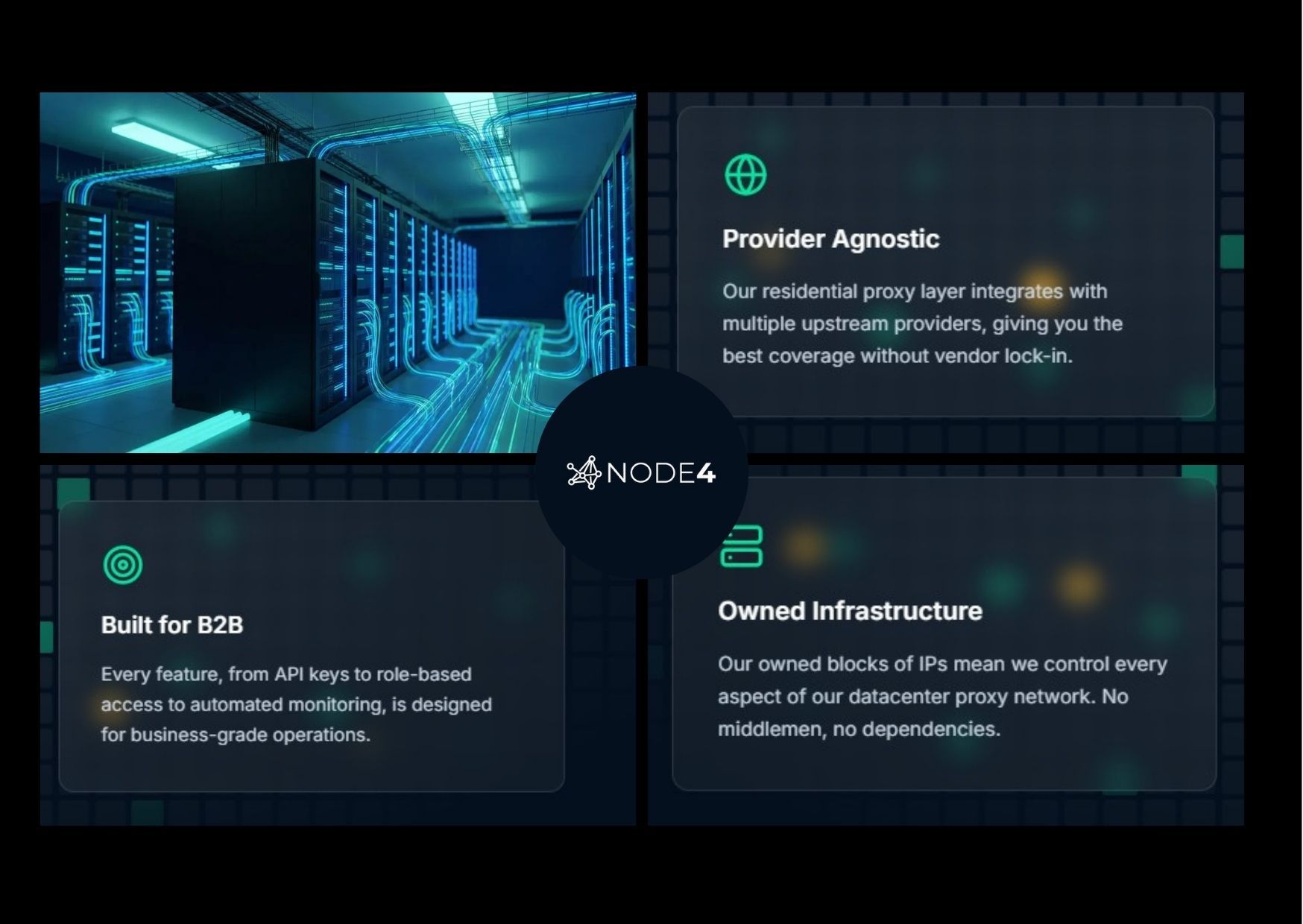
To compare rotating proxy services effectively, evaluate how rotation is implemented, how stable performance is under real traffic, and how well the provider supports your specific workflow. Look beyond pricing and scan for concrete operational details like session behavior, error handling, and geographic consistency. When you align proxy behavior with your automation goals, you can reduce failed requests and improve overall data quality. This is why many teams focus on sourcing strategies that support flexible access rather than relying on one-size-fits-all configurations. For a practical path forward, choose a provider that emphasizes speed, stability, and convenience in its proxy network and onboarding. node4.io is positioned around reliable rotating access for data collection, flexible online tasks, and privacy-focused routing, with service options designed to match modern scraping and automation needs. If you’re deciding between rotating and static approaches, use your test results to confirm which behavior produces the most consistent outcomes. Then scale using the provider whose performance and controls best match your tolerance for identity changes and connection variability.