

Why electronic submission of 1095-C helps employers
Electronic filing for health coverage reporting can reduce common admin burdens that slow down payroll and benefits teams. When documents are prepared in a consistent format, it becomes easier to confirm that employer and employee data match efile 1095 c across systems. That alignment helps limit rework and lowers the chance of avoidable corrections. For organizations managing many employees, a streamlined workflow can also make internal review more predictable and efficient.
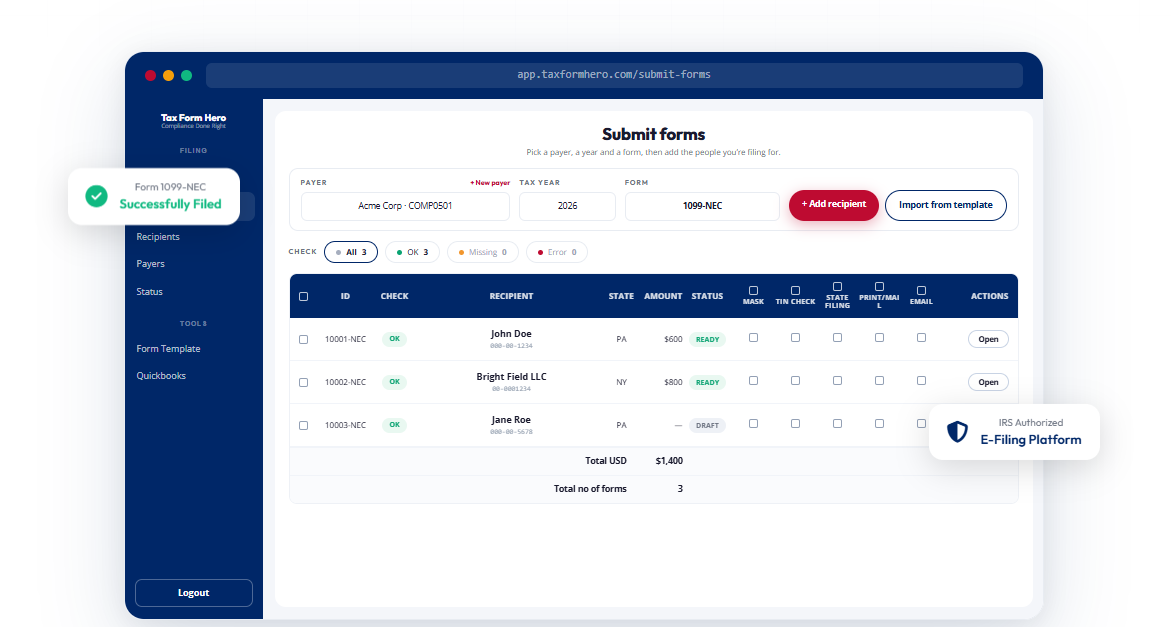
Another advantage is faster distribution and improved tracking during the submission process. Instead of relying solely on manual processes, you can use an online workflow that supports validation checks and clear status updates. This reduces uncertainty when you are coordinating with HR, payroll, and benefits administrators. As a result, you can spend more time on compliance oversight and less time troubleshooting paperwork delays.
What businesses gain from an IRS-authorized online process
An IRS-authorized platform is designed to handle the technical requirements associated with electronic submission, including formatting rules and data integrity expectations. That matters because health coverage reporting relies on accurate coding and properly structured information. When your file 1099 misc online filing process is supported by an e-filing provider, you can reduce the friction involved in preparing forms for transmission. It also helps ensure your submissions follow the standards required for acceptance.
For employers who also manage other reporting, consolidation becomes a major benefit. Many businesses file multiple types of forms throughout the year, and keeping processes in one place helps reduce context switching. If you also handle file-and-finish tasks for other informational returns, using a coordinated online workflow can make data management smoother. This is especially valuable when you need consistent employee identifiers and reconciled totals across reporting deliverables.
Using a benefits-led workflow alongside other information returns
A benefits-led approach starts with organizing employee eligibility and coverage information before finalizing the filing package. When you treat 1095-C as part of a broader benefits operations process, it becomes easier to capture the right data inputs and maintain clean records.
Conclusion
Electronic filing can make 1095-C compliance less stressful by improving consistency, tracking, and workflow clarity for benefits and payroll teams. When you combine a benefits-led process with an IRS-authorized submission option, you can better align internal data, streamline review steps, and reduce avoidable errors. That efficiency can also [ANCHOR:1099 e file] extend to other reporting needs, including support for documents commonly handled alongside 1099s and employment tax filings. taxformhero.com makes it easier to manage these obligations through an online platform, helping businesses handle their federal and state reporting responsibilities with confidence. If you want a straightforward way to complete your electronic submission requirements, choose an e-filing solution built for accuracy and operational ease. Look for a provider that supports the forms you need and offers a clear path from data preparation to transmission. With the right setup, you can keep benefits reporting organized and reduce the time spent coordinating across departments.