

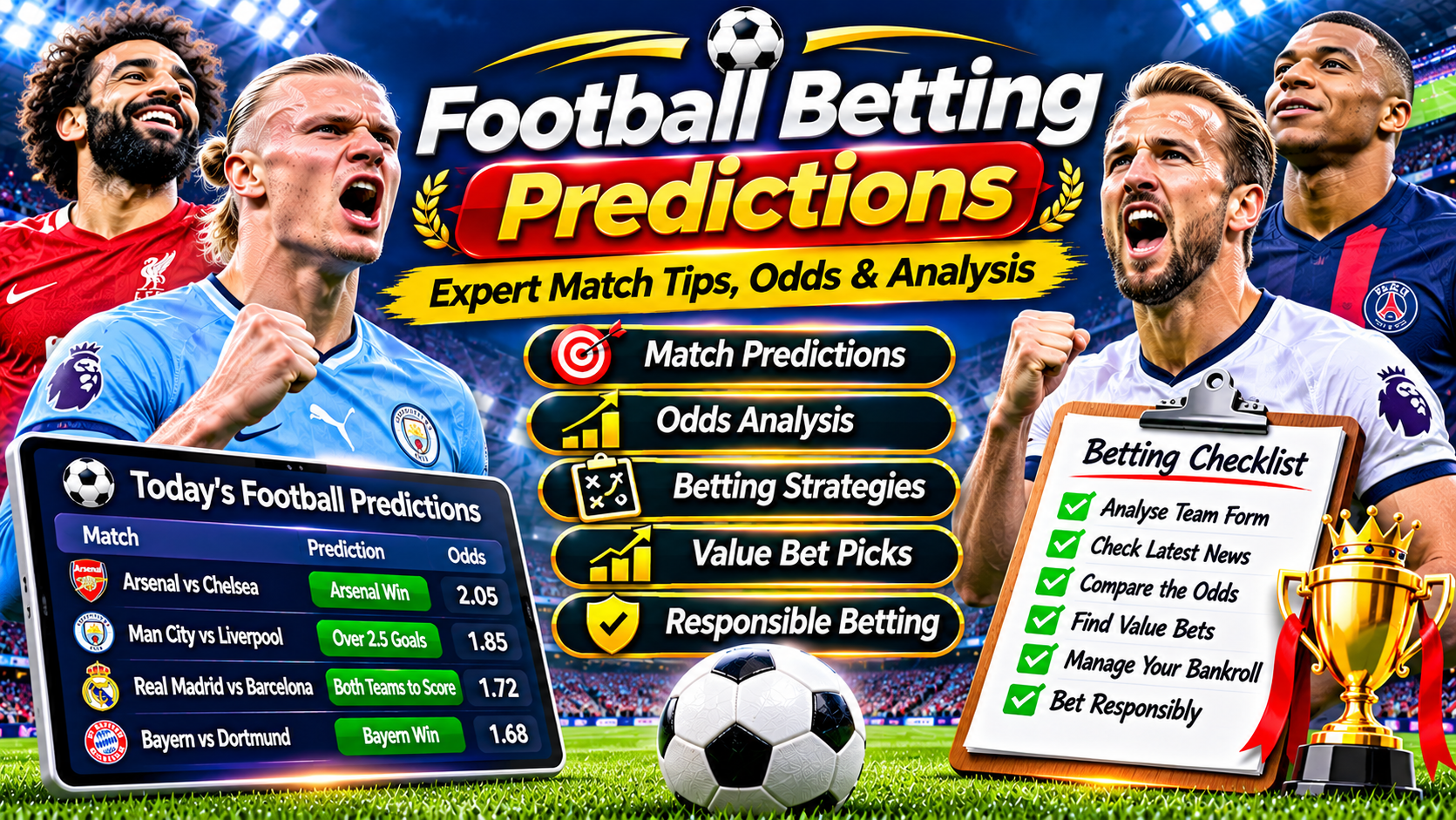
Turn Uncertainty Into a Repeatable Betting Process
Most bettors lose money because they treat each match like a brand-new puzzle. A better approach is to turn uncertainty into a repeatable workflow that you can apply every time. Start by separating what Football Betting Predictions you know from what you assume, then verify assumptions with form, matchup, and market signals. This problem-solution method reduces emotional bets and helps you spot value more consistently.
Begin with a quick checklist: team motivation, recent lineup stability, tactical style, and how each side performs under pressure. If a team is winning but barely covering expectations, you may be looking at regression risk, not “real strength.” Also pay attention to schedule congestion and travel factors because they often show up in late-match intensity and substitutions.
Match Preview: Identify the Tactical Edge Before You Bet
A strong match preview doesn’t just ask who is better; it asks how the teams will play. Look at the likely midfield battle, because possession without control usually leads to fewer high-quality chances. Then examine transition patterns: teams that defend deep but counter quickly can create value in under-market goal scenarios. When you understand the game script, you can choose markets that align with how goals typically happen.
Use team news to solve the biggest “hidden variable” problem—lineup changes. Even one missing starter can shift pressing intensity, widen defensive spacing, or reduce set-piece threat. If a winger who drives the final ball is out, the favorite might win territory but struggle to convert. Conversely, if a striker returning from injury is expected to start, goal markets can reprice quickly and create odds value. This is where careful pre-bet analysis helps you avoid betting against the actual match plan.
Form, Strength, and Odds: Where Value Usually Hides
Betting markets reflect public information, but they sometimes overreact to a single result or a short streak. Your job is to compare surface form with underlying performance indicators like shot quality, chance creation, and defensive errors. For example, a team that wins due to late goals may not be as reliable as the table suggests. When you align your assessment with expected goals style logic, you can identify mismatches between odds and real probability.
Next, evaluate the price itself. If the market implies an outcome is far more certain than your analysis supports, that’s a value gap you can exploit with goal lines or double-chance markets. If the odds are already efficient, you might need to switch from “must-win bets” to lower-variance angles. Consider how bookmakers handle risk: markets often move after confirmed lineups, so you should be selective about timing. By treating betting odds as data rather than fate, you improve decision quality.
Goal Markets and Safer Picks for Different Risk Levels
Not every bet requires predicting the exact score, and that’s where goal markets can solve a common problem: overconfidence. Total goals lines help you express a belief about tempo and finishing without forcing a precise outcome. If both defenses concede low-quality chances but allow few clear looks, under-oriented markets can make sense. If one team consistently struggles with aerial duels or set-piece coverage, over-market selections may be more justified.
To match risk to your bankroll, use a tiered plan. Beginners often benefit from double-chance or “both teams to score” filters only when the matchup supports it tactically. Intermediate bettors can add first-half goal considerations if pressing style is likely to produce early chances. Advanced bettors may combine markets using correlations thoughtfully, such as pairing a team’s directional strength with a total goals threshold. Whatever level you choose, ensure your selections share a clear rationale, not just excitement.
Conclusion
By building a repeatable checklist, analyzing tactical matchups, and cross-checking odds against underlying indicators, you reduce guesswork. The goal is not to predict every result, but to make smarter bets with a clearer edge. When your decisions follow evidence rather than emotion, consistency becomes far more achievable. Finally, practice responsible betting: set limits, avoid chasing losses, and only stake what you can afford to lose. If you can’t explain why a bet makes sense after reviewing lineups and matchup dynamics, it’s probably not a bet you should place. Use match analysis to guide your choices, then review outcomes to refine your process. With discipline and a value-first mindset, you can turn uncertainty into a plan that supports long-term improvement.